space-mel
SPAtial single-CEll omics research training for MELanoma precision medicine
MSCA Doctoral Network funded under HORIZON-MSCA-2025-DN
The CHALLENGE
Melanoma is a highly heterogeneous disease in which tumour cells, immune cells and surrounding tissue interact in complex spatial patterns. Current diagnostic and molecular approaches often analyse these components separately or lose information about their position within the tissue. This limits the identification of reliable biomarkers and the ability to predict disease progression or treatment response.
The project
SPACE-MEL aims to overcome these limitations by combining advanced spatial single-cell and multi-omics technologies with computational modelling and artificial intelligence. By linking molecular information to the precise location and organisation of cells, the project will generate a more complete understanding of melanoma biology and support the development of more accurate diagnostic, prognostic and treatment-stratification tools.

Moving from 2D to 3D analysis

Multi-omic integration on a single sample

Develop accessible computational tools

Reveal pathomechanisms and novel targets

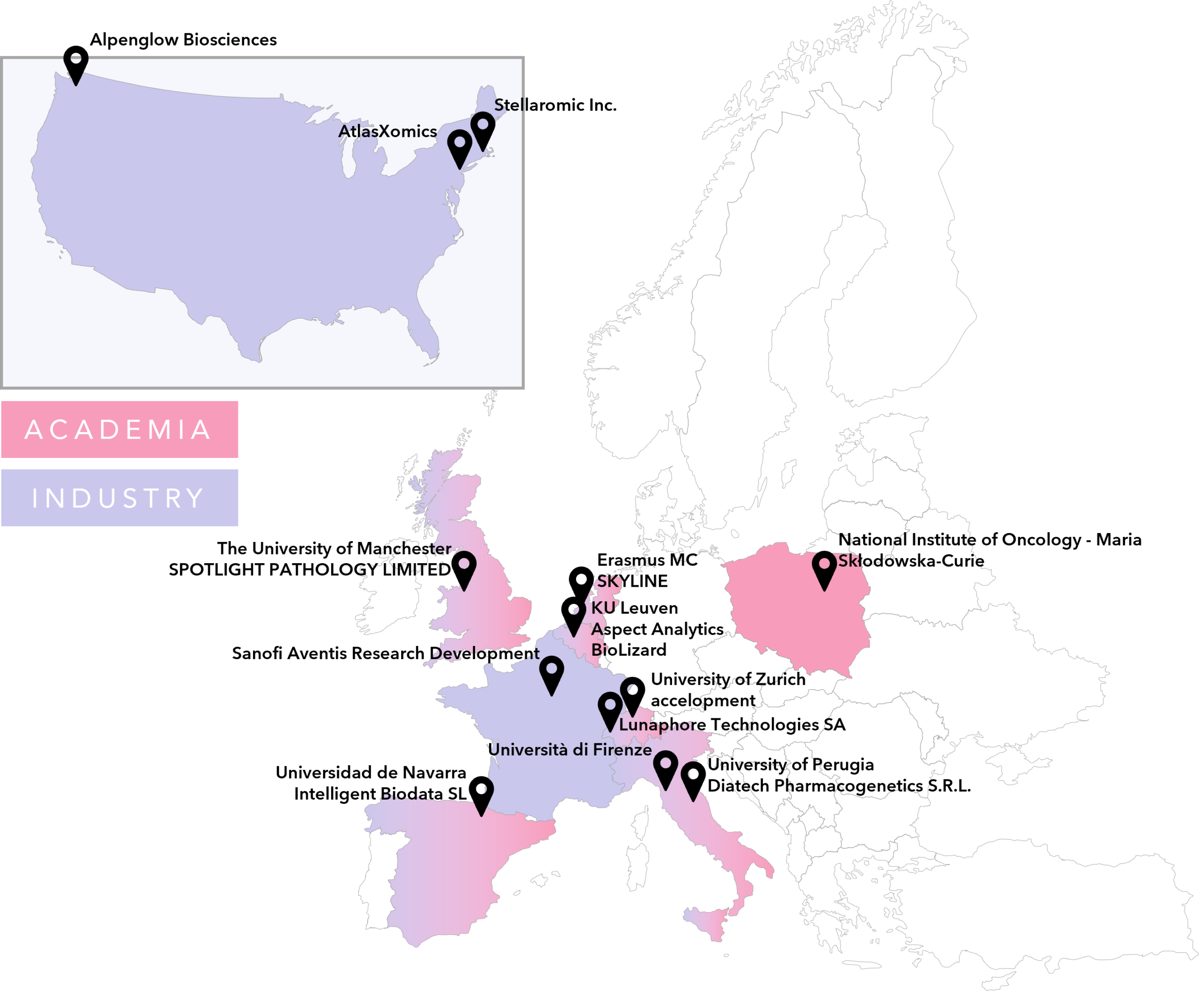
SPACE-MEL is a Marie Skłodowska-Curie Doctoral Network funded under HORIZON-MSCA-2025-DN, bringing together European universities, clinical centres, technology providers and innovative companies. It will recruit and train 15 Doctoral Candidates through 15 fully funded PhD positions across spatial imaging, molecular biology, pathology, multi-omics, computational biology, artificial intelligence and biomarker discovery.
doctoral candidates
universities
industry partners
main research areas
Spatial single-cell and multi-omics technologies
Developing and combining advanced methods to analyse RNA, proteins, epigenetic features, metabolites, glycans and lipids within their precise tissue context.
2D and 3D tissue analysis
Extending spatial biology from conventional tissue sections to thick tissues, organoids and three-dimensional melanoma models.
Melanoma biology and tumour microenvironment
Investigating tumour heterogeneity, immune-cell organisation, cell-cell interactions and the mechanisms driving progression, metastasis and treatment resistance.
Computational biology and artificial intelligence
Creating multimodal data-integration methods, spatial models, digital pathology tools, foundation models and natural-language interfaces for complex datasets.
Biomarker discovery and validation
Identifying prognostic and predictive biomarkers for mucosal melanoma and early-stage melanoma.
Clinical translation and precision medicine
Translating spatial multi-omics findings into improved tools for diagnosis, patient stratification, risk prediction and treatment decision-making.